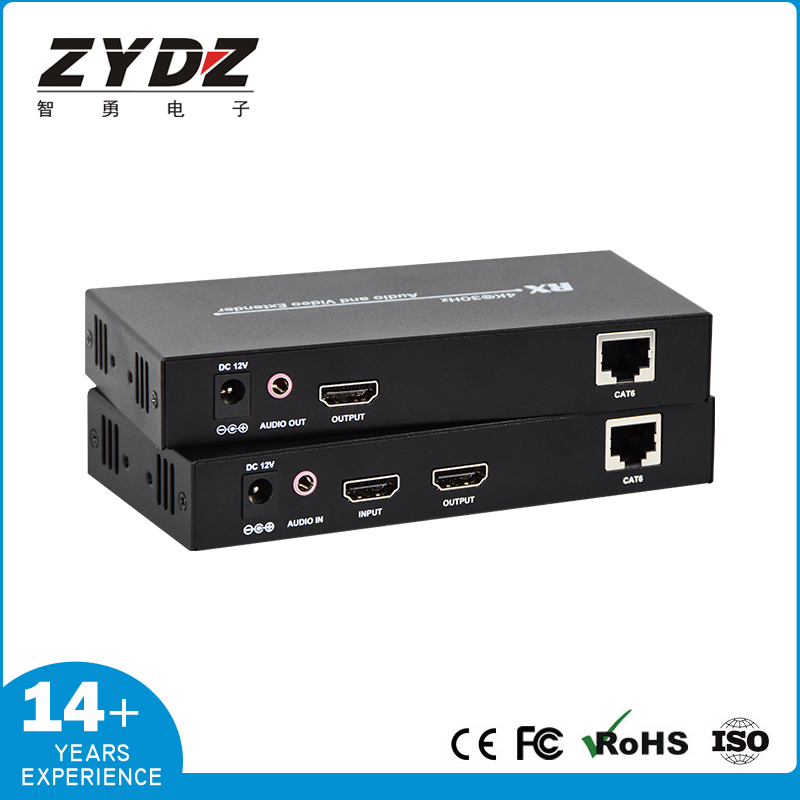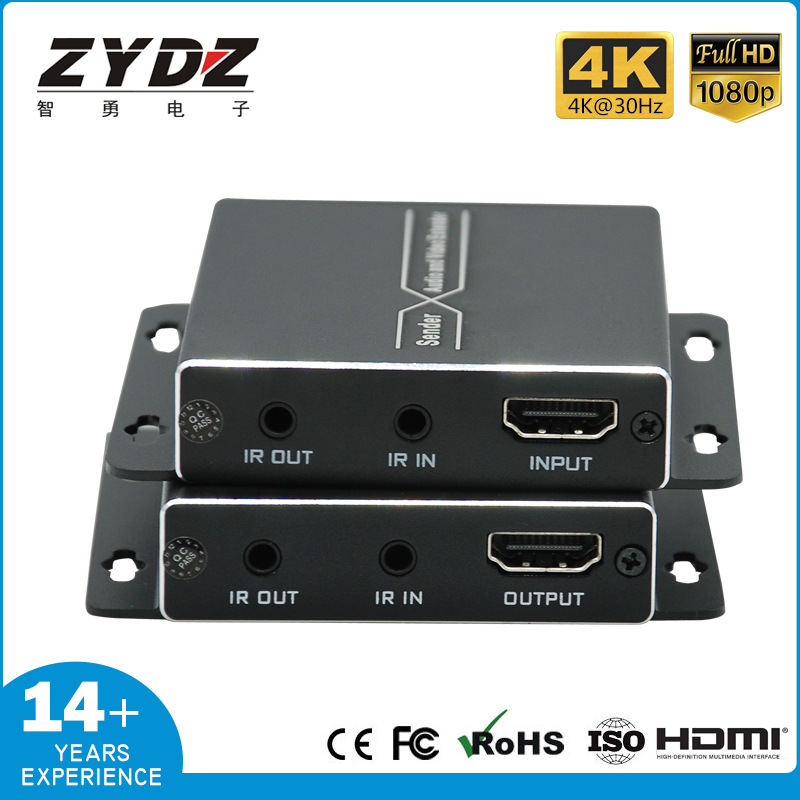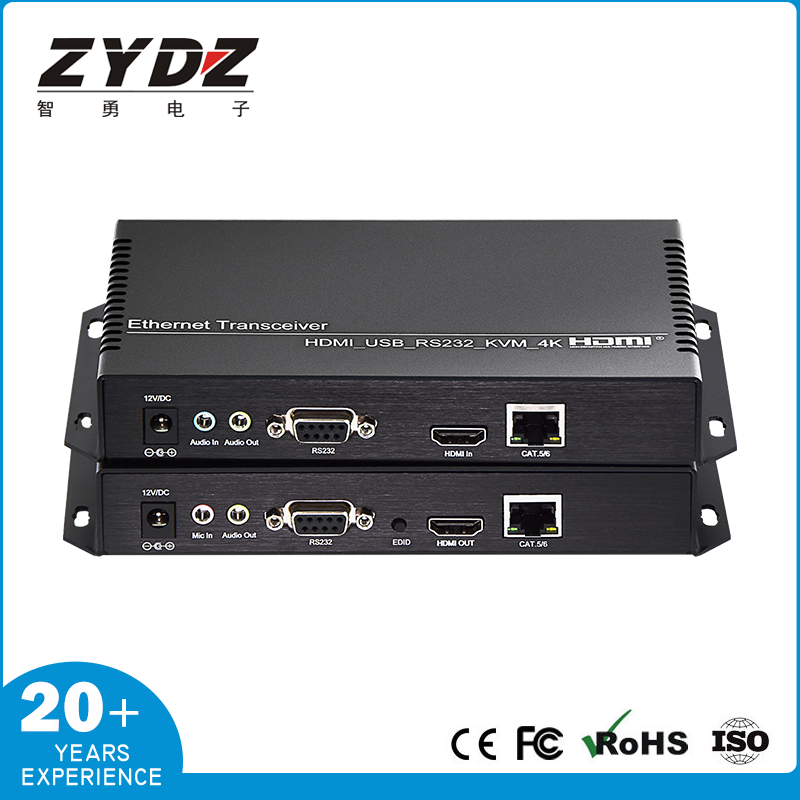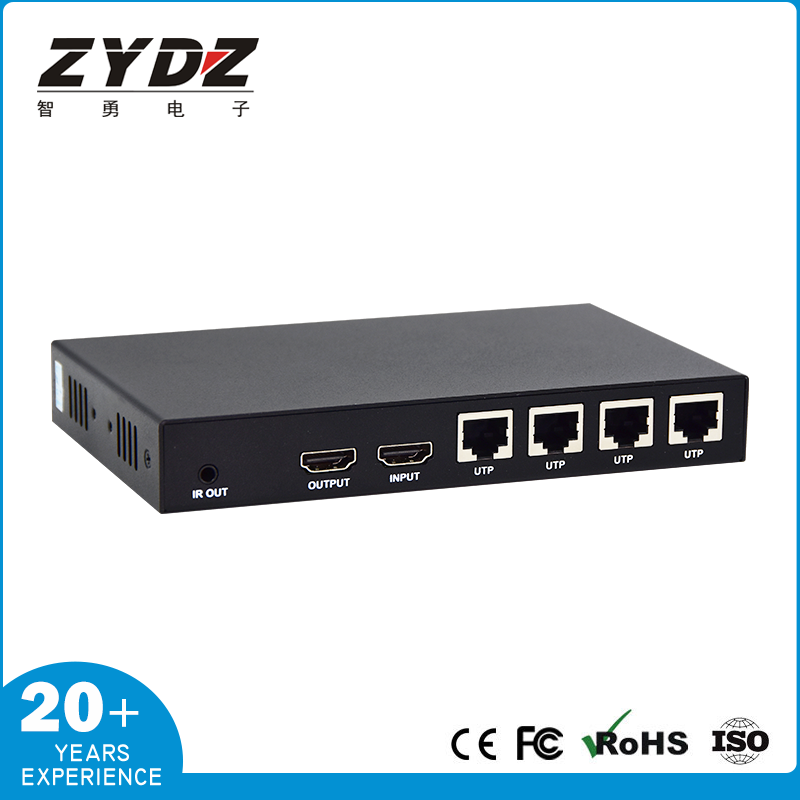
ZY-CH704 HDMI 1x4 TCP/IP single Ethernet cable distribution extender is a high-performance device designed specifically for multi-channel HDMI audio and video distribution and transmission. By using a single Ethernet cable with Cat6 or higher specifications, HDMI audio and video signals can be transmitted in high-definition format up to 200 meters, solving the problems of limited transmission distance and multi screen distribution of traditional HDMI cables.
The product is based on TCP/IP Ethernet communication protocol and can achieve multi-channel cascaded transmission through Ethernet switches or receivers, supporting up to 253 receiving points. Simultaneously supporting local HDMI output and infrared (38KHz) feedback control for long-distance transmission, the signal source player can be remotely controlled on the display end. The extender has built-in EDID learning function, greatly improving device compatibility and automatically matching signal sources and display devices.
This device has advantages such as long transmission distance, low usage cost, easy installation, and good compatibility. Built in ESD electrostatic protection circuit and automatic adjustment system ensure smooth, clear, and stable images. The pure Ethernet cabling method is simple and efficient, supporting ordinary 100Mbps or 1000Mbps Ethernet switches. Widely used in 1-to-1 audio and video distribution and transmission scenarios such as stores, restaurants, classrooms, surveillance systems, and digital advertising.
💡 Core advantages:1-to-4 allocation+200 meter Cat6 Ethernet transmission+TCP/IP cascade 253 points+local HDMI output+infrared feedback control - an ideal solution for large-scale multi-channel audio and video distribution and transmission.
| Model | ZY-CH704 |
|---|---|
| Supported Protocols | HDMI 1.3 / HDCP 1.2 |
| HDMI interface bandwidth | 6.75Gbps |
| Max Resolution | 1920x1080@60Hz And downward compatibility |
| Suggested HDMI cable length | Less than 5 meters (within 1920x1080@60Hz When) |
| Infrared interface | Standard 3.5mm audio interface |
| Ethernet cable specifications | Cat6 and above UTP cables |
| Maximum transmission distance | 200 meters (one-to-one transmission) |
| allocation method | 1-on-4 (cascading up to 253 points through switches) |
| Local output | Support local HDMI output |
| power supply | DC 5V |
| size | 164x102x24mm |
A transmitting end is connected to four receiving ends through a network cable to achieve multi-channel synchronous distribution of HDMI signals, suitable for multi screen display scenarios.
Based on the TCP/IP Ethernet communication protocol, it supports up to 253 receiving points through switch cascading, flexibly achieving large-scale 1 to many transmission.
Using Cat6 and above specification Ethernet cables, the one-to-one transmission distance can reach 200 meters, breaking through the traditional HDMI cable distance limit.
The transmitter supports local HDMI output and can be connected to a local monitor near the signal source for easy debugging and content monitoring.
Supporting 38KHz infrared signal feedback, the signal source player can be remotely controlled on the display end, making remote control more convenient.
The built-in ESD electrostatic protection circuit ensures the safe operation of the device, and the EDID learning function automatically matches the signal source with the display device, making it plug and play.
Multiple display screens in shops, restaurants, and other places simultaneously play advertising content, with 1-on-4 allocation to meet small-scale multi screen needs, and cascading expansion to 253 points covering large venues.
The multimedia classroom distributes the teacher's computer images synchronously to multiple display screens, ensuring that every student can clearly view the teaching content.
Commercial buildings, exhibition centers, and other multi screen advertising push scenarios are flexibly networked through TCP/IP networks, with one signal source driving all advertising screens.
Multi screen display scene in the conference room, synchronously pushing the speaker's screen to the display screens of various sub venues, supporting infrared feedback remote control signal source.