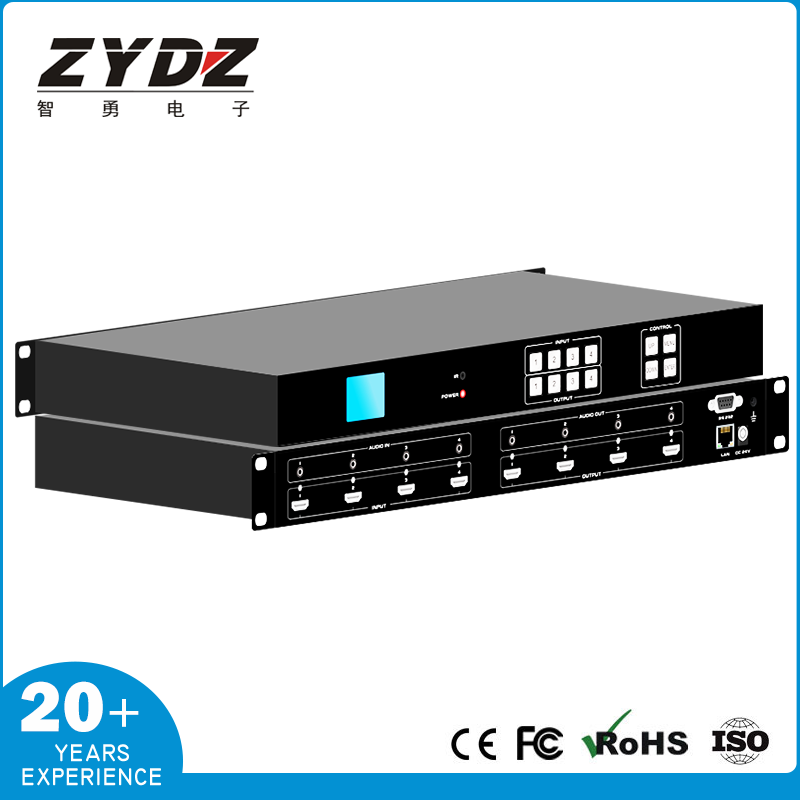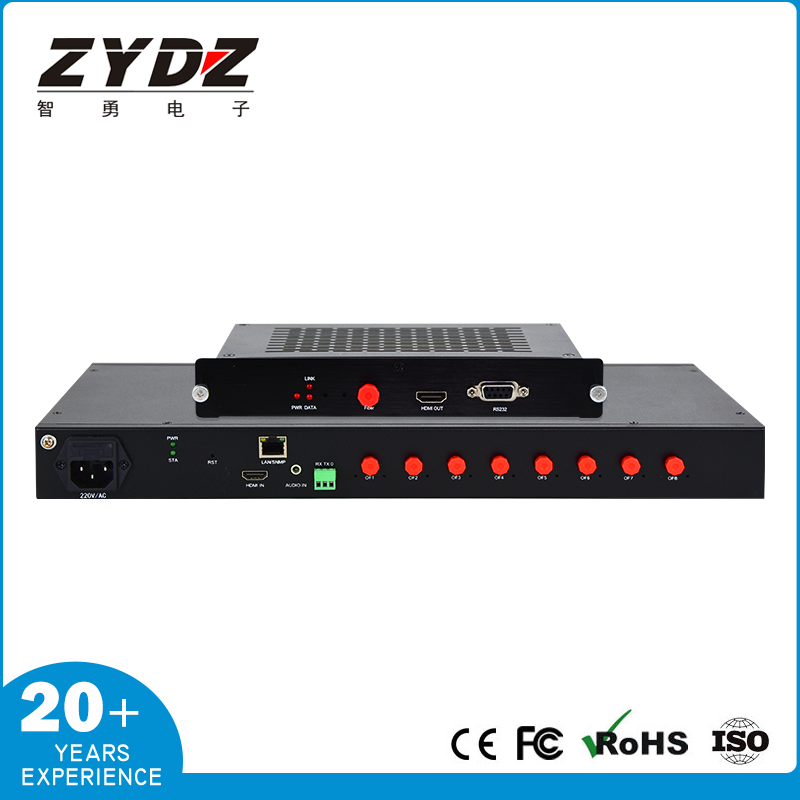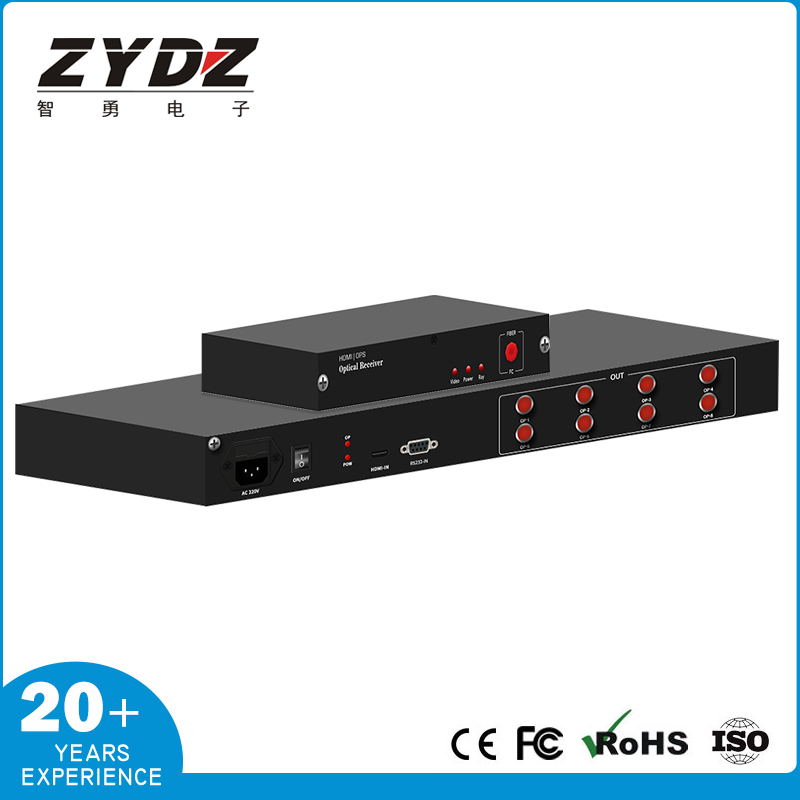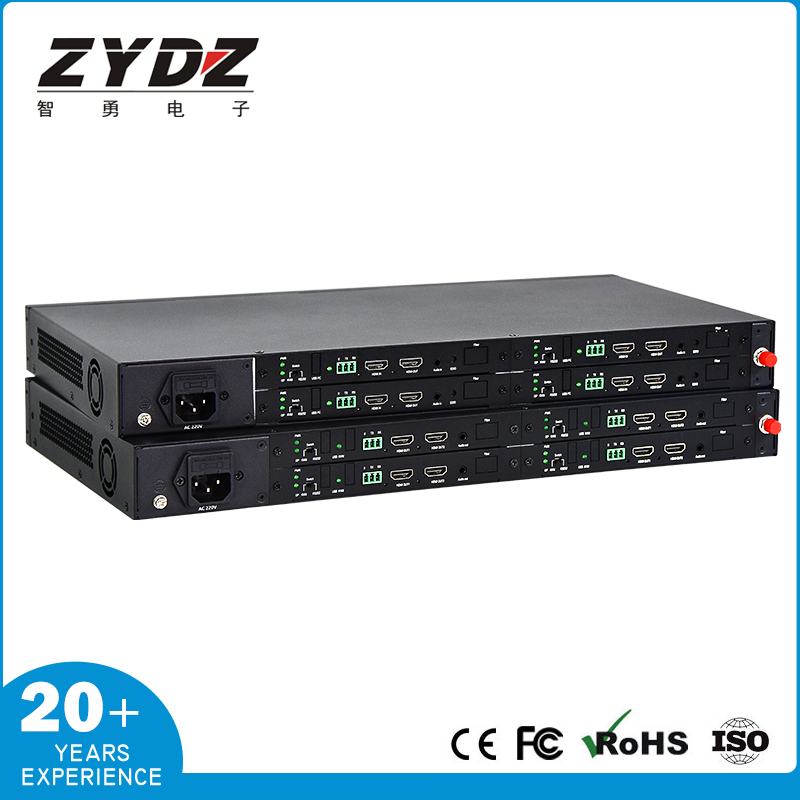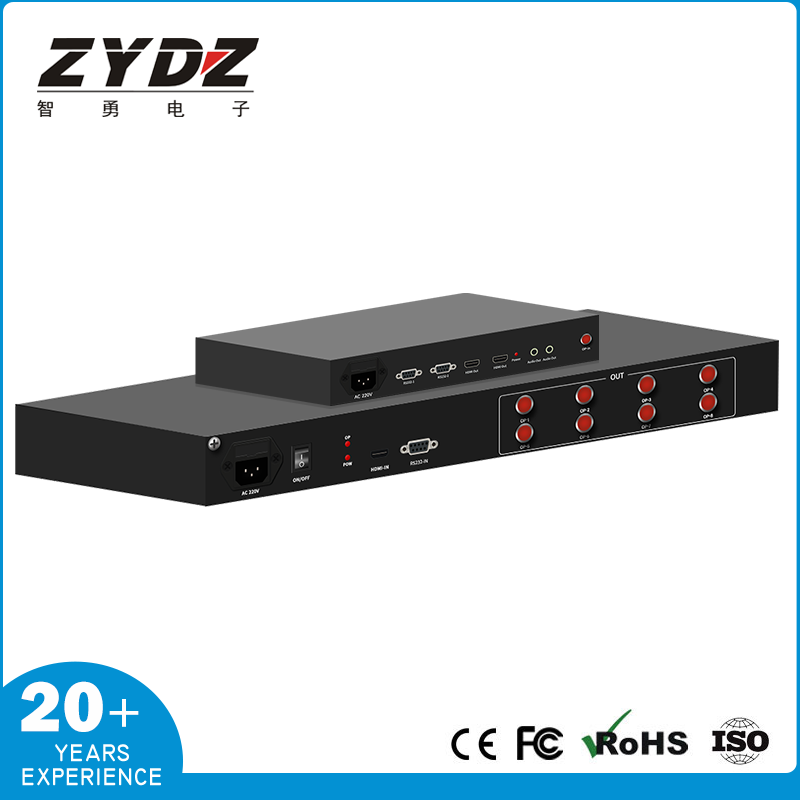
PIS audio and video optical transceiver is a multi signal fusion fiber optic transmission device tailored by Orivision Electronics for the passenger information system (PIS) of rail transit. The device integrates 1 HDMI audio and video channel, 2 RS232 control signals, and 2 stereo audio channels for transmission through a single fiber optic cable, fundamentally solving the tedious problem of multiple cable layouts in traditional solutions and achieving the minimalist deployment concept of "one fiber carrying all signals".
In terms of image quality performance, it supports 1080P@60Hz to 4K@30Hz Resolution, 10 bit color depth ensures delicate and full colors on the screen, without delay or tearing. The HDMI 1.3/1.4 protocol is adaptive and perfectly compatible with various mainstream commercial screens. Single fiber single-mode optical fiber transmission can reach up to 10KM, with stable optical power (-5dBm transmission/-18dBm reception). The natural electromagnetic interference resistance of optical fiber ensures long-distance lossless transmission of signals, especially suitable for strong electromagnetic environments along rail transit lines.
In terms of deployment flexibility, the sending end supports modular configuration of 1/4/8/16 channels, which can be flexibly selected according to different scales of PIS systems such as subway stations and high-speed railway stations. The receiving end has dual screen driving capability, and one receiving end can simultaneously drive two back-to-back installed display screens (such as the front and back of the platform), greatly reducing equipment procurement and installation costs. RS232 baud rate 4800-112200 intelligent matching, 3.5mm stereo audio interface, full interface design ensures seamless compatibility with various PIS devices. Plug and play, no software configuration required.
💡 Core advantages:HDMI+RS232+audio multi signal fusion+ 4K@30Hz Ultra clear+10KM fiber optic remote+1 receiver driver with 2 screens+plug and play - the simplest and most efficient signal transmission solution for rail transit PIS system.
| Product Name | PIS audio and video optical transceiver |
|---|---|
| Supported resolution | 1080P@60Hz / 4K@30Hz |
| Video Protocol | HDMI 1.3/1.4 adaptive |
| bit depth | 10Bit |
| signal channel | 1 HDMI audio and video channel+2 RS232 channels+2 stereo audio channels |
| transmission method | Single fiber single-mode fiber, up to 10KM in length |
| transmitted optical power | -5dBm |
| Receiver Sensitivity | -18dBm |
| control interface | RS232 (bidirectional transmission, baud rate 4800-112200 adaptive) |
| audio interface | 3.5mm stereo audio interface |
| Sending end configuration | 1 route/4 routes/8 routes/16 routes are optional |
| Receiver driver | Can drive 2 back-to-back display screens |
| fiber optic interface | FC interface |
| Video interface | HDMI-A |
| Power Supply | 220V AC |
| Operating Temperature | 0℃ ~ 40℃ |
| Operating Humidity | 20%~90% RH (non condensing) |
| Installation method | Plug and play, no software configuration required |
support 1080P@60Hz to 4K@30Hz Resolution, 10 bit color depth, delicate and delay free image, HDMI 1.3/1.4 protocol adaptation, seamless adaptation to various mainstream large screen display devices.
A single fiber optic cable synchronously transmits 1 HDMI audio and video channel, 2 RS232 control signals, and 2 audio channels. One fiber optic cable replaces multiple copper cables, greatly simplifying the wiring structure and reducing engineering costs.
Single fiber single-mode transmission can reach up to 10 kilometers, and optical fibers are naturally resistant to electromagnetic interference. Stable optical power (-5dBm transmission/-18dBm reception) ensures long-distance lossless transmission of signals and adapts to strong electromagnetic environments along rail transit lines.
The sender supports flexible configuration of 1/4/8/16 channels, while the receiver can drive 2 back-to-back display screens, reducing the number of devices and lowering procurement costs. Plug and play without debugging, significantly reducing deployment cycles.
HDMI 1.3/1.4 protocol adaptation, RS232 baud rate 4800-112200 intelligent matching, 3.5mm stereo audio interface, fully interface design seamlessly compatible with various PIS system devices.
Two RS232 bidirectional control channels, supporting remote control of display screen power switch, brightness adjustment, signal source switching and other parameters, in conjunction with PIS broadcast control system to achieve unified management of the entire display screen.
The core equipment for signal transmission of passenger information display screens in subway station halls and platforms, with multiple signals arriving through a single fiber optic cable. The receiving end drives back-to-back dual screens, greatly reducing the amount of wiring and equipment required.
The signal transmission of multi area information display screens in high-speed railway station waiting halls, ticket gates, platforms, etc. supports one to many signal distribution and centralized management of the entire station display terminal.
The station information release of medium capacity rail transit such as light rail and tram is simple and reliable, suitable for outdoor and semi outdoor environments, and ensures real-time and accurate passenger travel information.
The multi screen monitoring display in places such as rail transit control centers and station control rooms ensures lossless real-time display of monitoring images through fiber optic remote transmission, supporting remote centralized control of display screens.
PIS audio and video optical transceiver supports multi-channel signal fusion transmission: 1 HDMI audio and video signal, 2 RS232 control signals, 2 stereo audio signals, transmitted simultaneously through a single fiber optic cable. RS232 supports baud rates of 4800-112200 and is adaptive, allowing for remote control of display screen switches; The 3.5mm stereo audio interface is compatible with mainstream audio devices.
The sending end is deployed in the trackside broadcasting control room, and the receiving end is deployed in the station hall/platform display screen end, connected through a single fiber single-mode optical fiber. The sender supports flexible configuration of 1/4/8/16 channels, while the receiver can drive 2 back-to-back display screens to achieve one to many signal distribution. The device is plug and play, does not require configuration, and can seamlessly integrate with existing PIS broadcast control systems.
support 1080P@60Hz to 4K@30Hz Resolution and 10 bit color depth ensure delicate and delay free image colors. HDMI 1.3/1.4 protocol adaptation, suitable for mainstream large screen display devices. Single fiber single-mode optical fiber transmission can reach up to 10KM, with stable optical power (-5dBm transmission/-18dBm reception), ensuring lossless transmission of long-distance signals.
Very convenient. The sending end supports modular configuration of 1/4/8/16 channels, which can be flexibly selected according to the size of the site. The receiving end can drive 2 back-to-back display screens, reducing the number of devices. All devices are plug and play, eliminating the need for complex debugging and significantly reducing deployment cycles. Fiber optic transmission simplifies the wiring structure, replacing multiple copper cables with one fiber optic cable, resulting in a simple and efficient overall solution.